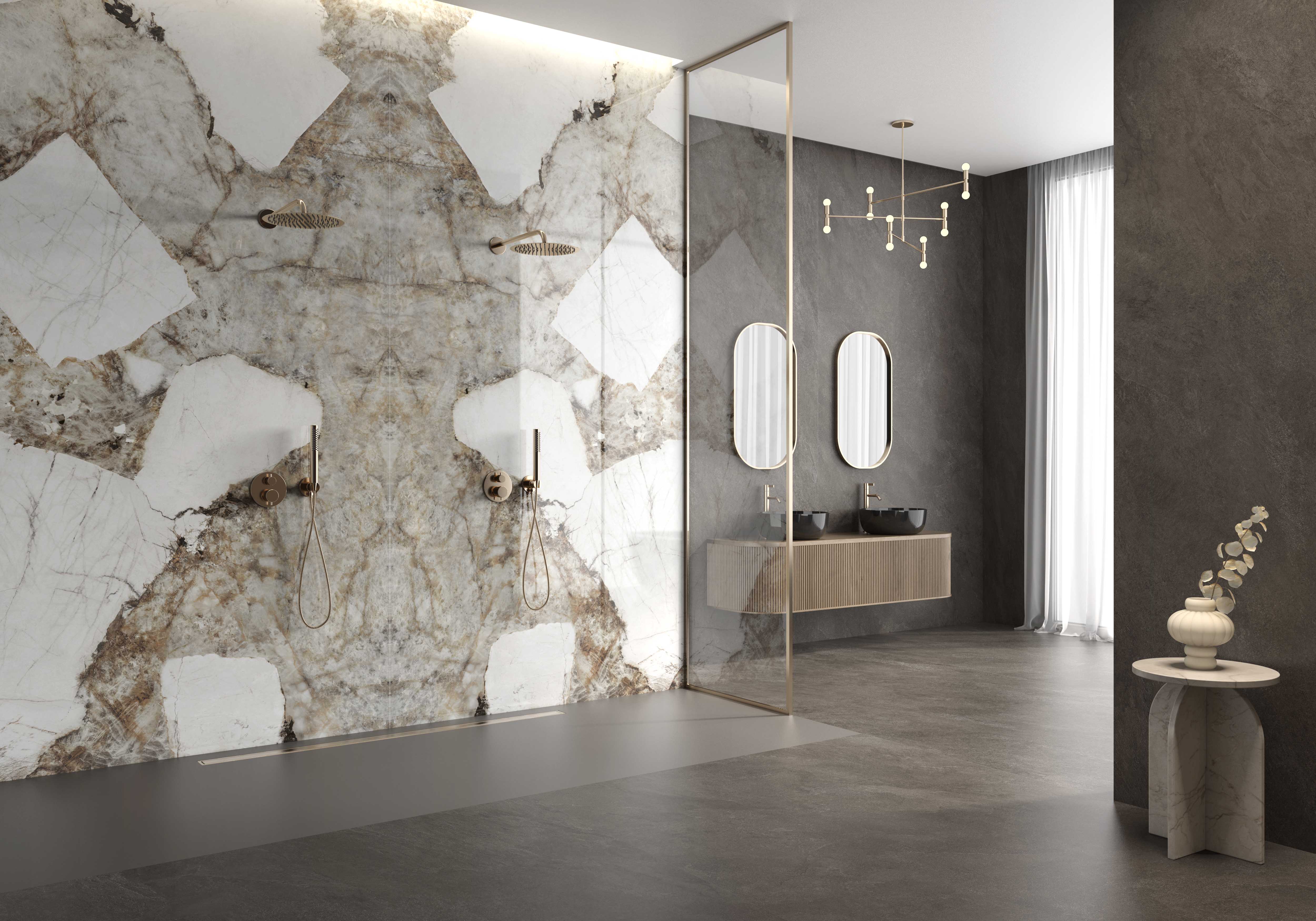
When designing or renovating a bathroom, cladding plays a much bigger role than most homeowners realise. It not only defines the look and feel of the space but also has a direct impact on durability, maintenance, and long-term value. With moisture, heat, and daily use to consider, choosing the right bathroom cladding is essential.
Why Bathroom Cladding Matters
The bathroom has become an extension of our living areas and a space to escape, unwind and relax. The right material can turn an ordinary bathroom into a spa-like retreat that adds real value to your home.
Bathrooms are high-moisture environments, so materials need to withstand humidity, splashes, and temperature changes without warping or deteriorating. Ventilation also matters. Even the most suitable cladding performs best when paired with good airflow, helping prevent condensation and prolong the life of the materials.
Traditional finishes like paint or wallpaper often struggle in these conditions. Porcelain bathroom cladding provides a robust alternative, creating a protective surface while elevating the overall design.
Consider Different Cladding Materials
Bathroom cladding comes in many forms, each with its own advantages. When choosing surfaces for bathrooms and interiors, homeowners will encounter a range of materials, from natural stone and tiles to modern slab solutions.
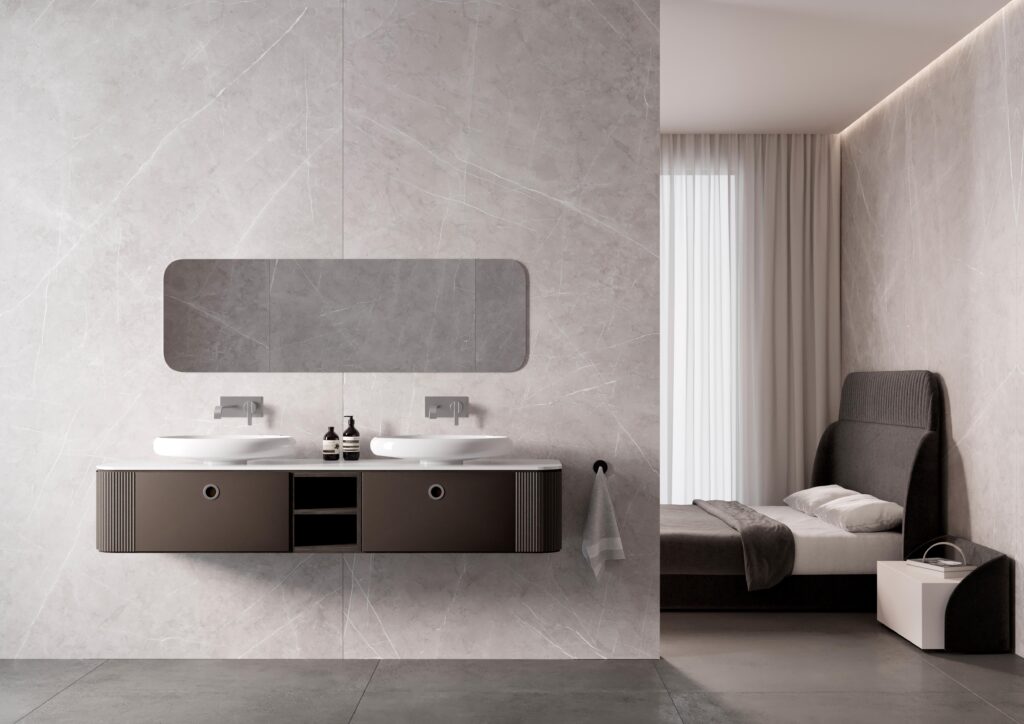
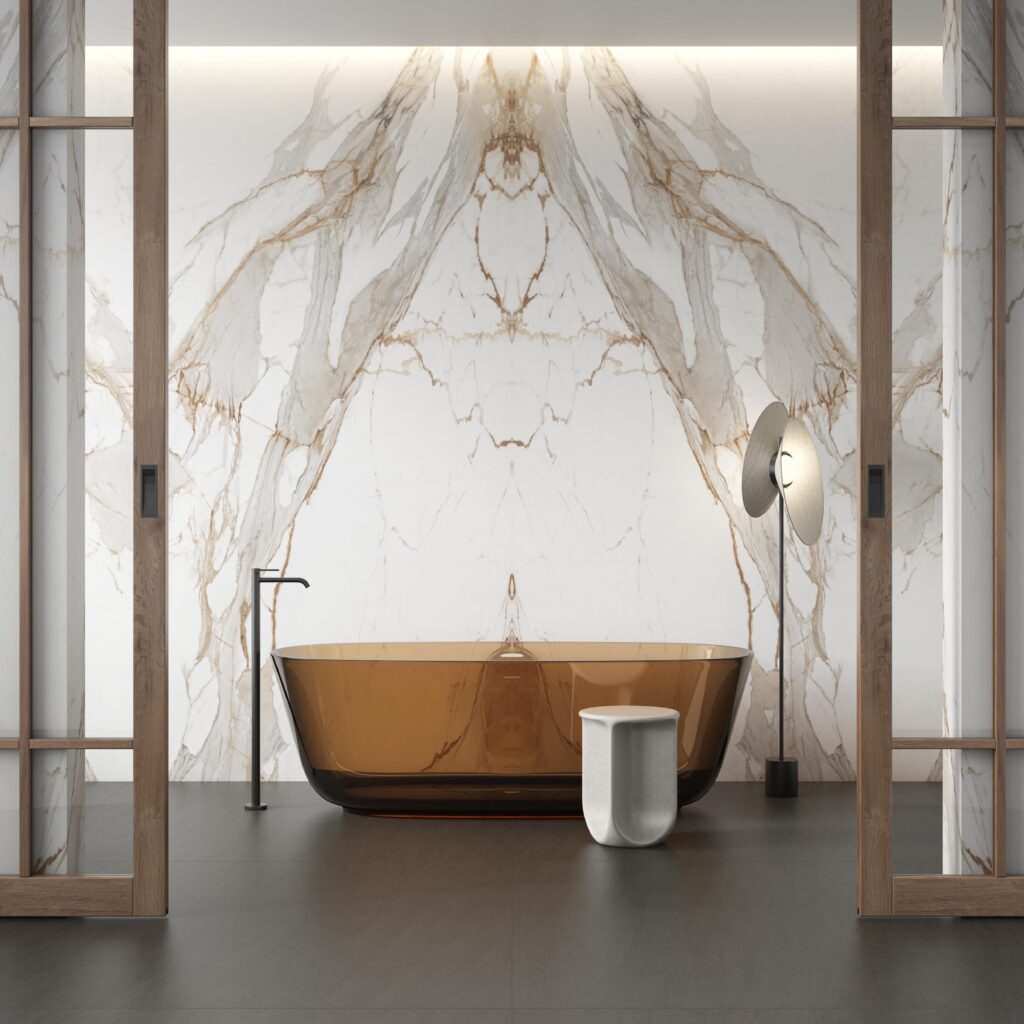
More recently, ceramic surfaces have become popular choices due to their balance of appearance and practicality. Ceramic surfaces are known for their strength and resistance to heat and moisture. Available in a wide range of designs, they can achieve looks ranging from classic marble-style finishes to more contemporary patterns, all while remaining low maintenance and suitable for long-term use.
Ceramic offers a reliable, low‑maintenance solution for modern homes, combining design flexibility with long-term performance.
Ceralsio from CRL Stone offers designs ranging from contemporary styles to marble-inspired looks.
Match the Cladding to the Bathroom Size and Lighting
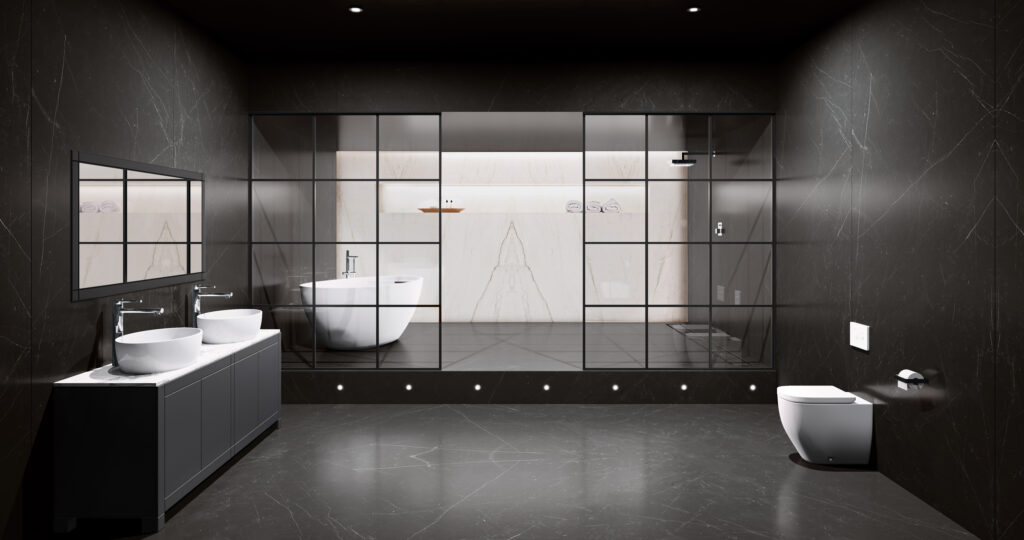
The size of the bathroom and the amount of natural light available can influence which cladding works best. Lighter colours and reflective finishes can help make small or windowless bathrooms feel brighter and more spacious. Darker tones often suit larger bathrooms, creating contrast and visual depth.
Large-format cladding can create a calmer, more streamlined look by reducing the number of joints, while smaller formats allow for more pattern detail and design flexibility.
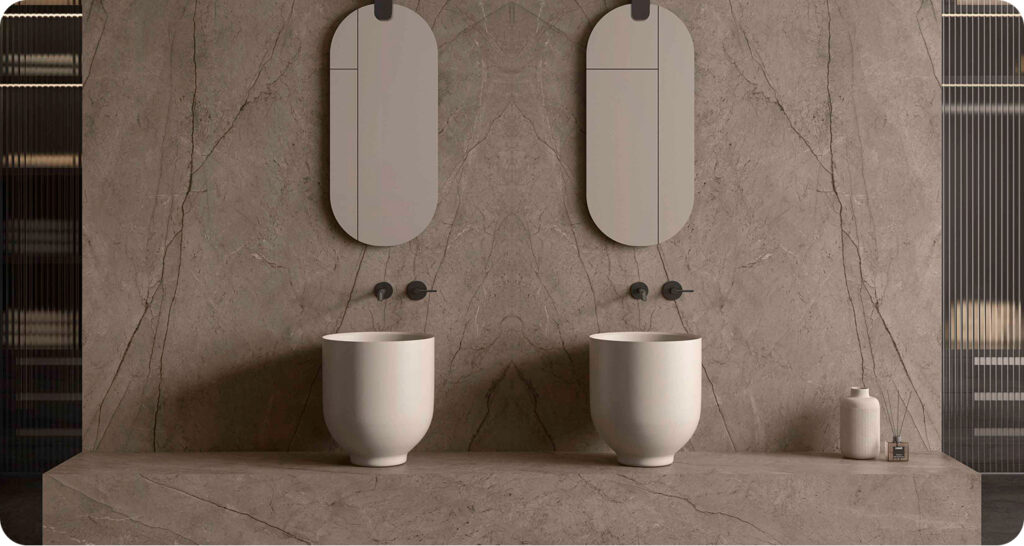
Choose a Finish That Fits Your Style
Finish is just as important as colour or material. Polished surfaces tend to create a sleek, contemporary feel, while matte or textured finishes can feel softer and more understated. The key is to choose a finish that complements how the bathroom will be used, not just how it looks in a showroom.
Coordinate with Other Bathroom Elements
Cladding shouldn’t be chosen in isolation. Walls, vanity units, flooring, and fittings all contribute to the overall look of the bathroom. Coordinating materials or choosing complementary tones can help create a cohesive and well-considered design.
Some homeowners prefer consistency across surfaces, while others use contrast to define different zones within the bathroom, such as shower areas or feature walls.
The right option depends on personal priorities. Homeowners focused on minimal upkeep may prefer non-porous surfaces, while those seeking a more organic look may value natural variation. There is no universal “best” material, only what best suits the space, lifestyle, and budget.
Request Brochure Request a Sample